Thursday, October 1, 2026

I put my life in one notebook, and I'm not looking back.

I used to have a stack of journals: a composition book for long form and creative journaling, one for prayers, another for writing, a catch-all notebook for random thoughts and notes, and a planner that had blank pages in the back, where I kept track of reading, expenses, etc. I thought it was nice to have a separate notebook for everything. It made it easy to find information, and it was like my brain went into a different room when I used a particular notebook for a particular purpose. I dove into poetry and fiction in my writing notebook. If I wanted to write about my day or make a creative spread, I went to my daily journal.

Then I felt the friction. If I wanted to write about an issue or an event that needed prayer, that could be placed in both my daily and prayer journals. A random creative idea would pop into my head. Catch-all notebook or writing journal? I began to realize that sometimes being too organized can actually drive me nuts.

So, I searched the web for ways to put my life in one notebook. I was inspired by this video and the grail method. I think social media and consumerism has encouraged people to have multiple journals when, for some, keeping everything in one place is the best method.

In August, I abandoned my Sterling Ink B5 academic planner I'd purchased this past June. It was one of many failed attempts at keeping up with a planner. After using a single notebook for two full months, I was free of the dated boxes, blank spaces, and the pressure to keep up. I no longer had to reach for multiple notebooks to write down certain kinds of information. I fused daily journaling with some bullet journaling techniques and came up with these monthly spreads. I'm currently using the coffee and books dot grid notebook from Shop Rongrong. Here are my spreads for October:

After the calendar, I draw a habit tracker and use the right side for monthly goals, reminders, etc. Then from there, I continue journaling.

So, to sum it up, I plan around my long form journaling. If I need to write a to-do list, I will usually put it on a framed sticker and place it in my journal. If I don't want/need to write something one day, then I don't, and I no longer have to feel the pressure from pre-dated pages. Whatever I want to write down ends up on the next line in my notebook. This means I can have things like a line I thought of for a poem, a random word I looked up, or a book I want to add to my TBR list below or next to my daily journaling or to-do list.

Is this disorganized? Sure. But if you watch the grail method video I've included in this post, that's the point. Collect all your information in one book. Ditch self-editing, filter out bad ideas, make connections, and review your notebook constantly. Remove friction.

And it's working great. I no longer question where to put information that could belong in two different journals. I simply grab my notebook and jot it down. My screen time has decreased. I read and write more. I do flip through my journal and review past information. Perhaps organizing our writing too much assures us that it's in the right place, which causes us to just leave it there and move on. My notebook is now my daily journal, planner, and the place where I put brain dumps, writing ideas, prayer lists, and random thoughts and rants. It's also so much easier to travel with; I have all my writing with me and no longer need to pack multiple journals.

I only keep my language study and morning pages separate from my everything notebook. I prefer to keep morning pages in one place because it's three pages of stream of consciousness writing that takes up a lot of space and having it in one book does make it easier to browse through and notice patterns and connections in my morning thoughts. And language study? I'd prefer not to hunt for batchim rules and Korean verbs in my journal.

With planner season among us, I have been tempted to try a planner just one more time. The colors and clean layouts are aesthetically pleasing, but I remember how many planners I've failed to keep and stay with my notebook. I continue to create and make messes in the journaling method I created for myself.

Monday, July 13, 2026

I wrote morning pages for 30 days. Here's what happened.

Photo by Therese Vercellone

I learned about morning pages several years ago when I discovered Julia Cameron's The Artist's Way. I loved the idea of writing three pages of longhand stream-of consciousness. I even read Cameron's The Miracle of Morning Pages a handful of times with the intention of starting the habit. Writing three pages longhand felt intimidating. Can I write three pages a day? What if I get stuck and have nothing to put down? (It's okay to write I don't know what to write, and if you let your mind wander, you will have more to write.) I wrote pages a few times last summer, but it wasn't until mid-June when I finally made morning pages a daily part of my life, and after a thirty-day streak, I can't see myself starting my day any other way. Here's why:

They're like morning stretches for my brain. I wake up with too many thoughts in my head. I love to get up, go to my desk, and open my notebook to a clean page. There. Three pages to mentally stretch out. I throw my first thoughts onto the page and go from there, unpacking whatever comes to mind. This slows down my rapid thinking and gives me the clarity I need in order to get set up for the day.

They help me stay productive. Ever since I released my debut novel, I got sucked into social media so I could market my book. Too many times, I'd grab my phone when I woke up, and I'd end up doomscrolling after I was done with my posts. Now I wake up ready to flesh out my morning pages. Starting my day with writing keeps me writing. I've been keeping up with journaling and using up the hoard of art journaling supplies and stickers I've accumulated. Sometimes I write the to-do items that have been nagging me for a while and writing them down creates the commitment to get them done. Finishing something first thing in the morning gets me going. Dumping my morning thoughts onto the page also means carrying less weight and stress around throughout the day. Thanks to morning pages, I'm more present and have cut back on my screen time.

Morning pages can be cleansing. I've been writing for thirty years, so I know journaling can bring up unpleasant thoughts. When these come up, sometimes I will make a note of the intrusive thought that passed through my head. Other times I process it. It's uncomfortable. It hurts. But I do it to rip it out of myself. It's on the page. I can close my notebook, leave it there, and sigh in relief. (NOTE: This point taps into mental health. Everyone has different coping skills. Confronting intrusive thoughts on paper might not work for everyone.)

They provide clarity. My morning pages can get repetitive sometimes. I've spent a lot of time writing about my frustrations with trying to find my people in the publishing community. The Quiet Edge of Memory doesn't fit neatly into a box, and I'm okay with that. While it's tough finding my place, I've found so much comfort in writing affirmations in my morning pages about who I am as a writer, and how confident I feel in my own skin, pushing against the mainstream and writing what I want and need to write.

I've unearthed literary gems. I love writing freely and openly first thing in the morning. When I get caught up in the flow, I put down some pretty awesome stuff. A few times, I've written lines to what I'd love to turn into poems for my forthcoming chapbook. One morning, I thought of a book title that I'm tucking away for future use. Morning pages don't have to be neat, flowery, or make any sense, but when they do, I catch those words, then highlight those sections when I'm done so they're easy to find when I need them for a project.

Morning pages made me a morning person. I used to be a night owl, but after having kids, I've had no problems falling asleep, which has made it easier to rise earlier. Now I make sure to wake up before my husband and kids and write. Sometimes I stop writing, I pause, and I take in how quiet it is. I can hear my own thoughts, sort them out, and write them down. I can finish something with no interruptions. Morning pages are a glorious dose of me time. They're such a normal part of my life, I was able to roll out of bed at 4:30 a.m. last month to write them when we were out of town and had to be on the road at 7:30. I mean, I wanted to keep my 30-day streak going too. ;)

I'll end this post with an excerpt from my pages today: Morning pages are the place that holds rants, grief, joy, on-the-fly to-do lists, memories, a constant change of subject, sloppy writing, sloppy grammar, impromptu poetry, deep reflections ... and me.

Morning pages hold me. Thank you for that.

If you have considered doing morning pages, I strongly encourage you to give them a shot. They might change you, awaken something inside you, and reveal some rewarding--and sometimes hard--truths about how you live and create. What you do with that information is up to you. I've read that some people destroy them, but I'll hold on to mine. They're a reminder of all the days I've chosen to start my mornings taking care of my mind and my creative self while doing what I love most.

Saturday, June 13, 2026

I did a thing.

I purchased the domain name for an adoptee literary magazine.

I've had this vision in my head for a few years, but negativity was getting its way. It's too much work. How will I find editors, artists, and make connections? I don't have a huge social media presence. How will I gain visibility? Maybe I'll just write my novel, get it out there, and keep my writing career in the confines of my own fiction and poetry.

Nope. The idea stuck around, and it wouldn't stop making noise until I did something about it. So, I got the website name (I'm not revealing it until the site is up), and I'm not looking back. I'm going to start a lit magazine that features writing and art from both domestic and international adoptees.

Now it's time to dive into lit mag research, start networking, and keep my creativity going with my forthcoming poetry collection. I'm tuning into lit mag podcasts, and I purchased Vevna Forrow's Lit Mag Nation, which I can't wait to read.

And, like most creative projects, the doubts are pouring in. I've never founded anything in my life. I was an editor for my schools' literary magazines in high school and college. I have experience working with editors and the publishing process after launching The Quiet Edge of Memory. But can I really do this? Are literary magazines still a thing? I see calls for submissions to them all the time, but do people value their work?

Regardless of what the answers are, I'm doing this, and this time, I don't want to hide under Patrick Star's rock. My project is out in the open, and I'm taking confident strides toward the finish line.

Friday, June 5, 2026

Yeah, I'm back on Instagram

That is, with a grunt.

I reactivated my account yesterday only to pop in and inform my followers that The Quiet Edge of Memory is back on Draft2Digital. Maybe I'll keep my profile up; I believe more of my target audience might be hanging out there, but I won't be posting on IG regularly. The ads and ASMR that greeted me after I signed in made me want to flee to BlueSky. Give me a text field over uploading aesthetic photos any day.

I'm currently reading Laren Ho's The Last Tang Standing. A few months ago, I tried getting into it twice but couldn't get past the first chapter. I pressed on this morning and am 20% through, and I'm hooked.

I feel Jane Eyre calling and would love to curl up with some Gothic literature next. Can I do that sitting in a manor by a fireplace, surrounded by books on a rainy day?

Hoping to make today a social media-free Friday. I need to get back into art journaling, tackle some laundry, and finally clear out the clutter that I no longer care about, because who wants useless crap when you have books?

Read, write, and remember--never betray your story. It offends the imagination.

Monday, June 1, 2026

Ambiguity: A mind game or a gift?

I fell hard for ambiguity in fiction after rereading An Na's The Place Between Breaths, a YA novel about a teenager named Grace whose schizophrenic mother has gone missing. Na uses the four seasons as chapter titles. Spring is the only chapters that have an assigned POV (Grace), but the other three seasons can be told from two characters' perspectives, and depending on who you choose will alter the story.

When I learned about this, all I could think was, WHOA! You can play with POVs and let your readers decide how they read the story? I've read books with multiple interpretations, but this was when creative control blew up in my face. You can tell from my blog title that unconventional writing techniques stick to my brain, and I'll never peel them off. I've admired Na's gift for writing for years and wondered if I could play with POVs in my own work. At the time, I was finishing my line edits for The Quiet Edge of Memory, and my pantser spirit was telling me to take a step back and reconstruct some of my novel.

I adopted Na's method and wrote a new opening chapter titled Maternity. I used second person, and the words pouring out were either Martha talking to her mother or Ian addressing his Korean birthmother or adopted mom. Both are yearning for a close maternal bond and expressing their fears about how their family dynamics would shape them in the future.

Okay, this was pretty cool, but what would my readers think? Is this a good idea for a debut novel? I had my doubts, but I kept going. I went through my manuscript and found any commonalities my characters had. In The Quiet Edge of Memory, my protagonists lug around baggage from depression and abuse. And as their parents navigate the aftermath of broken marriages, their fathers are the ones haunted by what ifs and should haves and are desperate for some closure.

So, I banged out more ambiguity.

Calamity can be read from Martha or Ian's father's POV.

Perplexity is either Martha's father or Ian watching her cope after she discovers her newfound faith comes with some heavy consequences.

Adversity is Ian addressing Martha or vice versa after he makes some life-altering decisions.

Infinity is Martha's mother or father talking to her before the story concludes.

And the last chapter? I can't explain it without spoiling it.

Photo by Therese Vercellone

My decisions for this novel were met with curiosity, criticism--and I'm grateful to report--some understanding. I was told this was a waste of time. It was too much work for my readers. I should have written an explanation in the book and wasn't putting my audience first.

In other words, taking creative risks should not be celebrated. It's selfish.

If writers never go beyond the trends and experiment with storytelling, there is no such thing as creating your own brand, honoring your own voice, and you will never know if a writing technique was worth it until you use it. Creative risks inspire and challenge art. They form discussions, cause you to ponder, and remind us that the imagination has no boundaries.

Ambiguity isn't for everyone and that's okay. I understand there are people who want every chapter of a story to make sense. But I also understand me. I understand what I wanted for The Quiet Edge of Memory. It became a story I never really finished writing because I let my readers do some of the storytelling, and I can't imagine it written any other way.

Saturday, May 30, 2026

I fell down the rabbit hole.

I recently celebrated six months as a published author, and I already have the first manuscript for my next project, which is a chapbook of poetry centering on my adoption story, simplicity, and my love for books and American poetry. I'm still wondering if this is real, considering it took me twelve years to write The Quiet Edge of Memory. But I owe my progress to a rabbit hole I found, and thankfully, I followed my gut and jumped in.

I've been revisiting a lot of the literature I read during my first two years of college. I have a newfound love for Henry David Thoreau's Walden, which I read twice in three weeks. I'm officially a fan of Walt Whitman. John Steinbeck's "The Chrysanthemums" left an ache in my heart that will be there until I die. And, of course, I can never have too much Emily Dickinson.

I find these works comforting for a very personal reason. I didn't have the best time in high school English. I thought writing five paragraph essays were confining. I would interpret literature differently, but my teachers weren't the most supportive when it came to writing outside the lines.

Then I went to college and had a professor who wrote on my first essay, "You're a great writer!" She's the one who told me to take risks, and it was in her American lit class where I read Thoreau, Whitman, and became endlessly fascinated with Dickinson. Finally, an English teacher believed in me, and her encouragement was the seeds for the writer I am today.

Thinking about my early college days led me down the most glorious rabbit hole. Last week, I unearthed all the poetry I'd written during that time and discovered a treasure trove of material about literature and my creative self. My wording and phrases were clunky, but my study of American literature at that time awakened the poet in me, and I will honor that segment of my life with this chapbook. With some tough love line editing, I can make changes to these poems that will match my writing voice today that also preserves the messages I voiced years ago.

This was originally going to be a longer collection of the poetry I had planned to write over the span of one year, but I'm resorting to a chapbook. I'm not the most compact fiction writer (I mean, my YA book is over 100,000 words), but I do write compact poetry, so for me, a strong poetry collection is a short one. I can only write so many verses about being severed from my birthmother and how Thoreau's writings have gifted me a deeper appreciation for nature and solitude.

So, I thought my next publication would be fiction, but it's a poetry chapbook. A working title and the cover design is begging to come out, but I'll release that in the near future. There's also a short story about a girl on an NJ Transit train and a dystopian novel brewing in my mind, but for now, I'm writing whatever ideas come to mind in my writer's notebook. I'm also going to take a few weeks (or days or hours) away from my poetry and revisit it with fresh eyes when I'm ready.

I'm still shocked about how far I've gone in my current WIP but remember: the writing life is a wild ride. I'm holding on and letting it take me wherever my creativity leads me.

Thursday, May 21, 2026

Six months as an author: Reflections and ramblings

Six months ago, my debut novel, The Quiet Edge of Memory, was released. Since then, I've been working on my social media presence, (Thank you, BlueSky, for existing. Goodbye, Instagram.) doing a ton of reading, and two weeks ago on my birthday, I started my new project--a collection of prose and poetry. I don't have a working title or release day yet, but it is such a comfort to be back in drafting mode on Word.

I still wake up some mornings and have to remind myself that I'm a published author. I poured my deepest thoughts about international adoption into my MMC, Ian. I used a lot of my academic experiences for my FMC, Martha, but I'm not snarky and outspoken like her. Truth is, I'm very shy, but writing has been my gateway to boldness. While I wrote draft after draft for this book, I had doubts, wondering if I should be so transparent. If I can really put myself in Martha's shoes and write from a voice that's not mine. But I pressed on. I paid for good editing. Even after putting in over ten years of writing, paying editors, rewriting, buying ISBNs, and investing in the cover design, I still had moments when I wanted to hide under Patrick Star's rock and throw it all away.

But I couldn't keep my manuscript hidden in my files. God kept nudging me forward. I went so far and worked so hard. Why back out?

I didn't. My name and book listing is on the Internet. I'm still getting comfortable talking about my novel with others. I still doubt if anyone will pick up the copies I leave in Little Free Libraries. It's still a big deal sometimes to hit that Post button on BlueSky, no matter how random or personal my ramblings are. In fact, it's even a big deal to me that I've maintained this blog for six months.

And the little things are a big deal too! A reader told me she devoured my book in two days and loved it. I checked my KDP account one evening and discovered I sold five copies in one day. Royalties have appeared in my account when I thought no one was seeing me on social media. When you write and put your work out there, people are watching, and if you think they're not listening, they probably are.

If you have a story in you, write it. If you want others to hear it, publish it. And if you want others to know you wrote it, speak up.

Now, I'm going to have a late breakfast, drink some hot chocolate, get sucked into Henry David Thoreau's journals, and write some poetry. And I'll keep being that writer who takes creative risks and does the opposite of what everyone tells me to do. (Remember: do NOT betray your story!) I love every minute of it and wouldn't trade in this crazy life for anything else.

Thursday, April 30, 2026

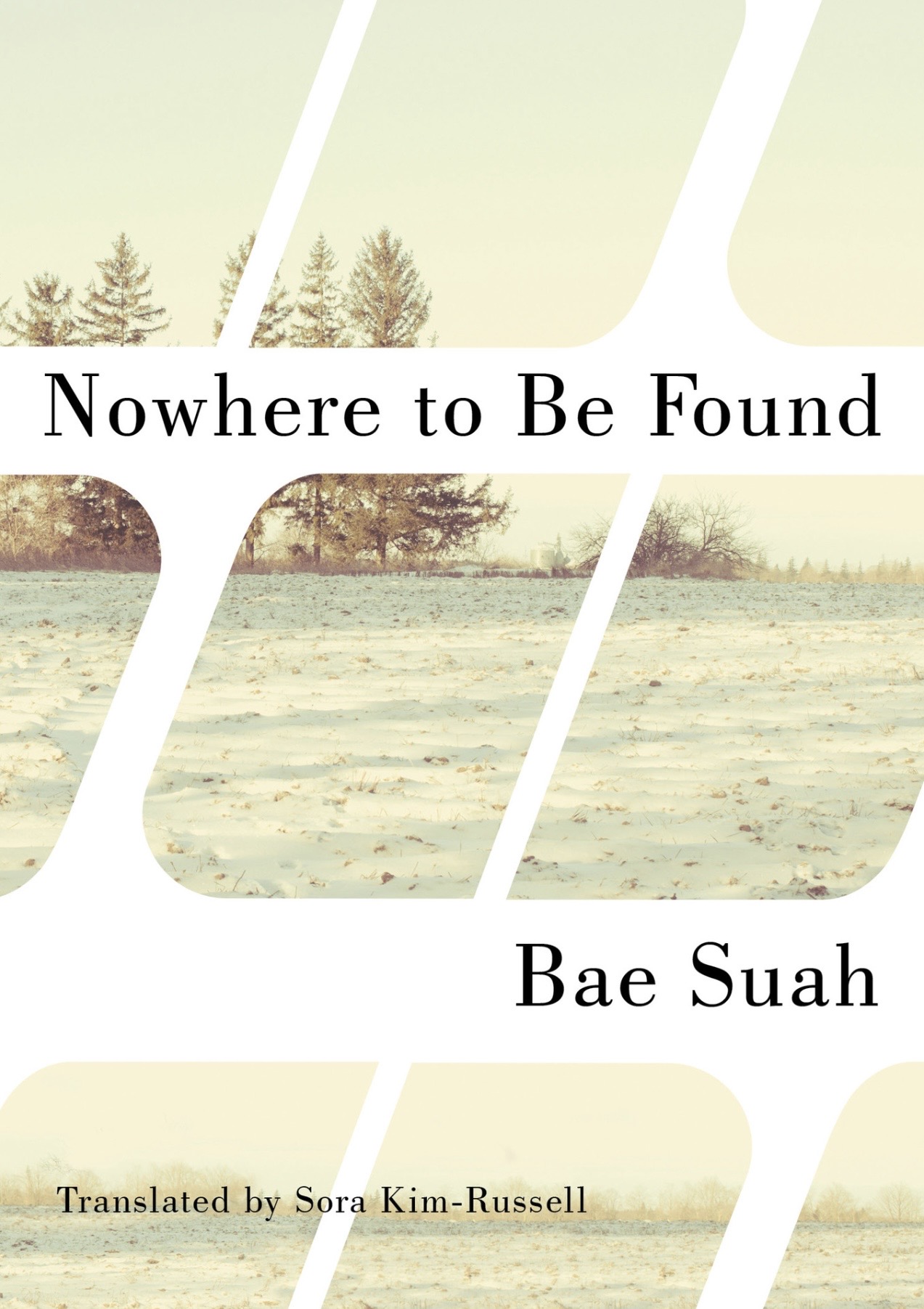
Nowhere to be Found by Bae Suah

Set in 1988 in South Korea, the unnamed narrator of Bae Suah's Nowhere to Be Found is working a clerical job at a university and waitresses at night. She is the middle child in her distant family with ten years between her older brother and younger sister. Her mother is an alcoholic. Her father is incarcerated for a crime he didn't commit, and she writes him letters she never sends out. Her family's economic situation is so bleak that she shares a winter coat with her sister. Her brother hopes to land a janitorial job in Osaka to support the family.

The narrator has a boyfriend, Cheolsu. They're not exclusively dating, but they act like a couple, and their friends think they're a couple. When they're intimate for the first time, her language is detached and clinical. Cheolsu is also in the military, and one day, his mother wants her to bring him chicken, because she doesn't feel like taking the long commute to the army base.

When she arrives at the base, she's given the runaround and has to go elsewhere to find him. At the bus stop, she notices a wanted flyer for one female and two males for a violent crime. The woman is described as having red hair and wearing baggy pants, and the men were wearing basketball shoes, Remember that.

When the protagonist finally gets to the base and meets up with Cheolsu, she admits she was afraid she would never see him again. At last, she opens up a little and displays some emotion and vulnerability.

After she visits Cheolsu, she becomes sick. Her brother leaves for Japan. Her mother asks how visiting Cheolsu went. She responds with "Cheolsu was not there. Cheolsu fell like a crow from a white cliff while I wandered through a village of soldiers in the snow carrying Cheolsu's dead chicken ..." and her mother notes that she and Cheolsu "don't make sense together."

She's right; they didn't make sense together. But what does make sense in the protagonist's life?

Fast forward, and the narrator is with another lover in a rundown home. She no longer is in touch with her brother, who successfully made it to Japan. She sees herself pass by a window and says, "I've heard that what appears in a hallucination is an image of the dead." Has she become so distant with the people around her that she's distant with herself?

She and her partner go to the Rose Garden. When they get there, she has an encounter with a woman with baggy jeans and dyed red hair and two men wearing basketball shoes. And then, the story ends abruptly. The narrator's take on life and her relationships can be shallow and dislikable, but her raw emotions kept me hooked until the end. I came to care and wonder about her long after I closed the book. She remains nameless throughout the whole novella, which stood out to me, considering how important names and their meanings are in Korean culture, but this further emphasizes the ghostliness of her identity.

I've read 17 books in April and Nowhere to Be Found is my favorite. I was immediately sucked into the narrator's psychology and how she moved through poverty, isolation, and depression. This story can be read in one sitting, but you might find yourself flipping back to earlier passages, searching for fine details you missed. Bae Suah's compact and lyrical prose gave me enough dialogue and descriptions to make the other characters three-dimensional without the need for extended backstories. A beautiful and ugly read that holds more depth and intrigue than most novels five times its length. This is my first read from Bae Suah and it won't be the last.

Tuesday, March 31, 2026

I'm an indie author, and I left Instagram. I have no regrets.

A few years ago, I opened an Instagram account. I kept it private for a while. Then, a month before my novel, The Quiet Edge of Memory, was released (I know; I didn't market far in advance), I set my account to public to draw potential readers in before my November 2025 release date. Slowly, my follower account climbed, A handful of likes came in. Hang in there, I thought. Keep the hashtags up. Get out of your shell. More followers will come.

I'm an introvert, so going public was a leap for me. I created some reels about my novel. I posted a cover reveal, a first page reveal. And I even shared some creative journaling pages. I used hashtags to draw my target audience in. I watched YouTube videos on how to make high-quality content, what video apps to use, how often I should post, etc. Release day was creeping up on me, and if I wanted people to know about my book, I had to put myself out there, because going indie means marketing was all my responsibility.

But I got sucked down the rabbit hole. I scrolled, and it was hard to stop. I compared myself to other Christian authors' posts. I spent too much time ensuring my IG posts were aesthetically pleasing on Canva. I kept putting in those hashtags, and I kept telling myself things will pick up. Keep trying. Keep promoting.

A few days ago, I posted a video about a last-minute trip I took to the city with a friend. I'd put my novel in a Little Free Library and documented the places we went. I used very broad indie book hashtags. My reel got over 300 views. Whoa. Okay, maybe I finally caught on. However, the engagement for this post was low.

Then it hit me: Life is happening as you try to get noticed on social media and doom scroll.

I was tired of trying to fit in with the trends, which is something I've never loved doing, hence my blog title. Who cares about what music was popular for reels? Why care if my journaling pages looked vintage or pleasing to the eye? Why was the combinations of hashtags I used in a post such a big deal when they were relevant to my content? (Pro tip: Using adoptee and Christian lit hashtags together is pointless.) I just wanted to create content that was 100% me.

I also wanted to reclaim my time. So, I deleted the Instagram, Facebook, and Discord apps from my phone. I cleaned out my YouTube subscriptions and favorites and cleared out my Watch Later list. I wanted to detach myself from social media to leave room for more life experiences rather than looking at the world through a screen.

Spring weather is officially here, and I want to go outside more, devour my TBR pile, be wildly creative in my journal, study Korean more, be present, and stop feeling the pressure of depicting myself a certain way. I'm not for the tapping, the ASMR, the sameness, and consistently sharing my life online. My book isn't trendy, and I'm okay with that. I'm okay with social media not being for me now, and I'm ready to look for alternative ways to market my book.

And I could totally do without those bot accounts.

If you've quit social media, feel free to comment and tell me about your decision to walk away.

Monday, February 23, 2026

You receive your first email about your book and …

​you think, OMG, someone not only took the time to read my book; he emailed me about it! He’s saying cool things about it!

But his tone is very generic and wooden. And he’s offering to help me market my book  properly for the next 60 to 90 days.

He’s AI.

I’ll stow this away in my memory as a humorous milestone in the author life.

If you’re reading this now and live in the Northeast, have a great snow day.